The first time Ethan tried a “one-size-fits-all” kibble, he worked so hard to chew each piece that dinner took forever—and the leftovers stared back at us. Our vet suggested switching to small-breed formulas with bite-sized kibble, higher energy density, and highly digestible proteins. That’s when meals got easier, his energy picked up, and our kitchen finally relaxed.

Red flag — call your vet: sudden weight loss, choking or struggling to chew, persistent vomiting/diarrhea, or dental pain. For tiny dogs and toy breeds, dehydration and low blood sugar can escalate quickly.
What Worked for Us (Story-Based Picks)
We began with a predictable daily base designed for small mouths. Hill’s Science Diet Small & Mini Adult (dry) poured like little buttons—easy to crunch, no wrestling match required. Within a week Ethan finished bowls without fatigue, and his stools told us the protein was agreeing with him.
On picky days, texture saved us. The mixed kibble pieces in Purina Pro Plan Small Breed Shredded Blend (dry) added aroma and bite that coaxed him back to the bowl. It became our “flavor weekend” choice without knocking his stomach off balance.
When his tummy felt touchy after a busy travel week, we leaned on a gentle formula made for tiny dogs: Hill’s Sensitive Stomach & Skin Small & Mini (dry). The small kibble, prebiotic support, and steady omega blend calmed things down while keeping meals simple.
For variety and hydration, we kept a wet option in the pantry: Hill’s Small Paws Wet (variety pack). A spoon or two over kibble added moisture and aroma—great for slower mornings or after long walks.
And because tiny dogs gain weight quickly, we set a “reset month” each spring with Hill’s Perfect Weight Small & Mini (dry). Controlled calories and a tidy scoop size kept portions honest without drama.
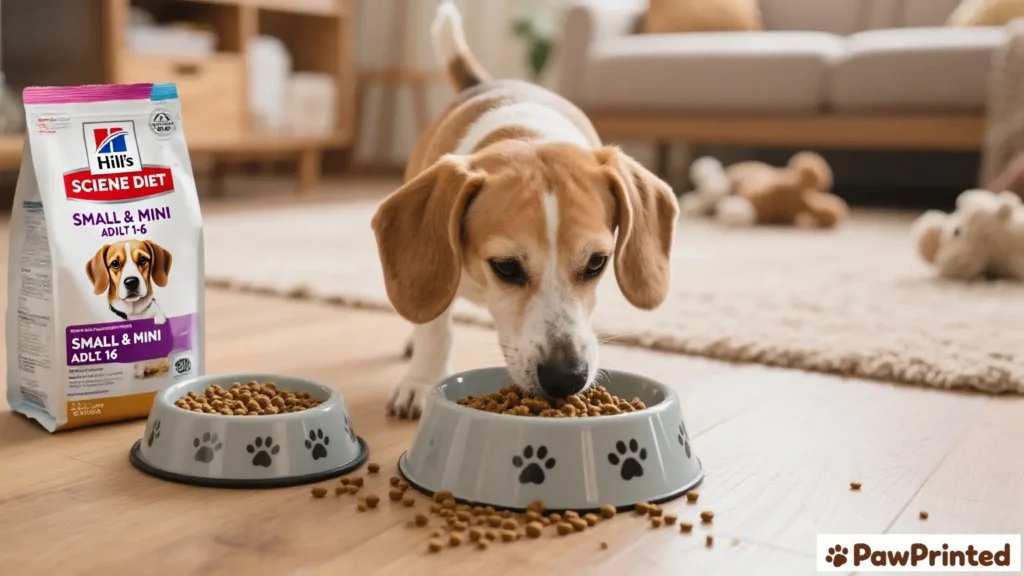
Why Small Breeds Need Special Care
Tiny mouths need tiny kibble—simple as that. But small-breed nutrition goes beyond size: faster metabolisms demand steady energy, while sensitive tummies benefit from digestible proteins and balanced fiber. We also found that aroma and texture matter more for small, picky eaters—wet toppers and warm water help a lot.
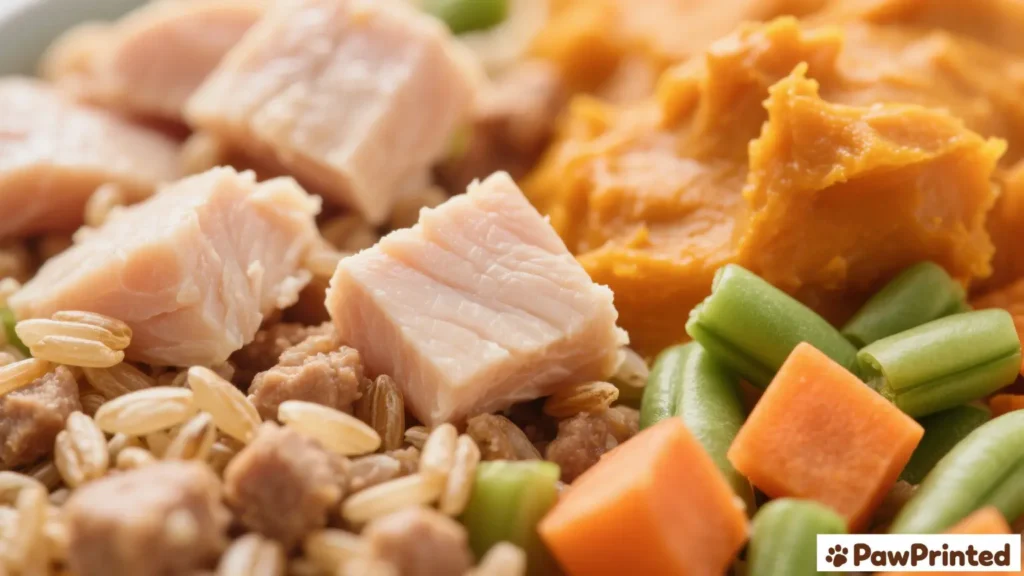
Our Small-Breed Feeding Routine
Step 1: Pick a steady base (Hill’s Small & Mini or Hill’s Sensitive Small & Mini). Measure meals by calories, not scoops.
Step 2: Split into 2–3 small meals to match faster metabolism. For appetite dips, add a spoon of Small Paws wet or warm water.
Step 3: For picky weekends, rotate in Purina Small Breed Shredded for texture—keep the rest of the routine steady.
Step 4: If weight creeps up, run a 4–6 week block with Hill’s Perfect Weight Small & Mini. Recheck portions weekly.
Comparison Table: Small-Breed Picks
| Option | Why It Helps | Best For | Link |
|---|---|---|---|
| Hill’s Small & Mini (dry) | Tiny kibble, digestible protein | Everyday small-breed base | go/hills-small-mini-adult-dry |
| Purina Small Breed Shredded (dry) | Mixed textures, great palatability | Picky eaters | go/purina-small-breed-dry |
| Hill’s Sensitive Small & Mini (dry) | Prebiotic support, gentle on tummy | Sensitive small breeds | go/hills-small-mini-sensitive-dry |
| Hill’s Small Paws (wet) | Moisture + aroma boost | Hydration & appetite days | go/hills-small-paws-wet |
| Hill’s Perfect Weight Small & Mini (dry) | Calorie control, steady routine | Weight-prone tiny dogs | go/hills-perfect-weight-small-mini |

FAQ
Yes. Small-breed formulas use smaller kibble and slightly higher energy density and digestibility to match faster metabolisms. Palatability and aroma also matter more for tiny, selective eaters. If chewing is hard or your pup tires during meals, choose a small-breed formula or add a spoon of Small Paws wet for moisture and aroma.
Some can, but it’s often harder to chew and less appealing. We’ve seen more consistent eating with Hill’s Small & Mini or Purina Small Breed Shredded. Tiny pieces, digestible proteins, and steady fiber make a practical difference.
Most small adults do well on 2–3 measured meals per day. For toy breeds or dogs with a history of low blood sugar, ask your vet whether three smaller meals are safer. Keep treats under 10% and count them in your daily total.
Dry food helps portion control and offers dental texture; wet food boosts moisture and aroma—many families use both. On picky days, layer a spoon of Small Paws wet over a small-breed dry base.
Try Hill’s Sensitive Small & Mini and keep everything else steady for 7–10 days. If diarrhea persists or red flags appear, review our diarrhea guide and speak with your vet.
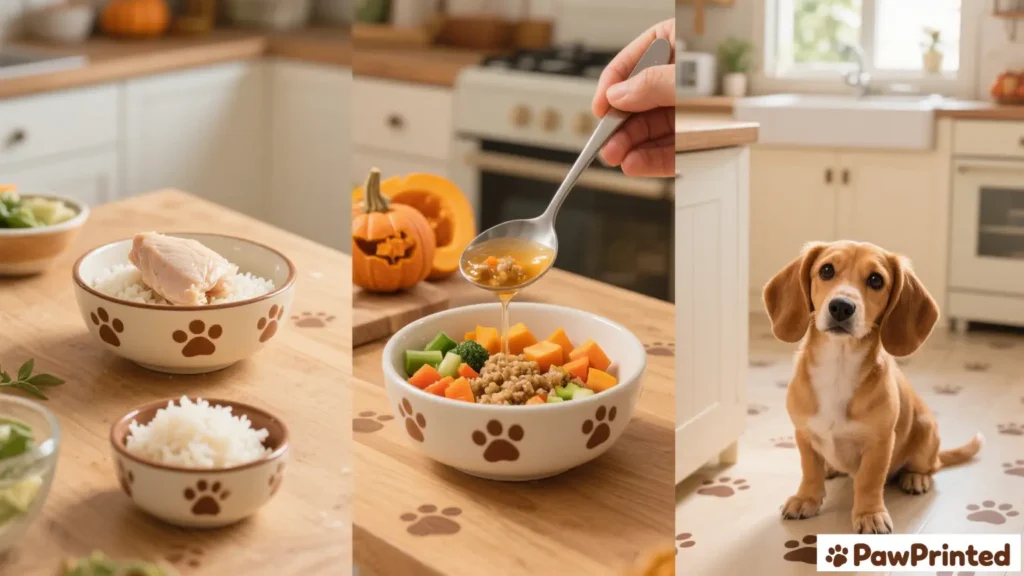
If you don’t want to cook daily, a small-breed dry base plus a spoon of small-breed wet can boost aroma and moisture without chaos.